So you’ve decided to learn German – but with so many language learning apps on the market, how do you know which one actually works? After testing more than a dozen German learning apps, we’ve narrowed it down to the top five programs that we find truly valuable. Here’s our breakdown of the best German apps, where we cover how each one works, pricing, pros and cons, and who each app is best for.
Video Review: Best Apps to Learn German
In the video above, Bianca from the Guide 2 Fluency team gives a full review of the best apps to learn German. She covers how each program teaches German, key features, pros and cons, pricing, and whether each option is worth it compared to other German learning apps. For more detail, be sure to continue reading our full written review below.
Sale: 60% OFF
Use Code: INSIGHT60
|
$180 lifetime |
Our absolute favorite German app. With audio lessons, detailed grammar instruction, and diverse exercises, Rocket German has it all. |
55% OFF + EXTRA 10%
Code: INSIGHT10
|
$8-$15/mo |
Our top choice for German beginners and budget shoppers. The perfect introduction app with quick lessons and foundational content. |
Free 7-Day Trial
Sign Up Today
|
$20/mo |
Like Rocket German, but different. Pimsleur offers in-depth audio lessons, a modern interface, diverse drills, and rigorous content. |
Sale: 25% OFF
Applied In Cart
|
$10/mo |
The old school, tried and true language learning formula. Based on immersion and imagery, this is the perfect app for visual learners. |
Sale: 70% OFF
Applied in Cart
|
$6-$14/mo |
This is the perfect supplement to any language app once you reach a certain level of fluency. Combine binge-watching German TV with learning. |
Editor’s Choice
Rocket Languages
- Free Trial
- 60-Day Money Back Guarantee
Pros
- We found the interactive audio lessons to be engaging and effective
- Uses Google’s speech software to perfect your pronunciation
- Standalone grammar lessons offer all the essentials in easy-to-understand chunks
- Loved the mix of drills after the audio lessons
- Excellent program structure with mix of audio, grammar and interactive drills
Cons
- Lessons are on the lengthy side
- Not many visuals in this program (visual learners take note)
Best Overall Language App: Rocket German
Upon first glance, Rocket German didn’t seem remarkable to me either, but don’t be deceived. Despite my initial skepticism, this app really impressed me.
Rocket German offers a comprehensive approach to learning that distinguishes it from other resources and apps that I have reviewed. It strikes a very delicate balance between academic depth and modern engaging content that I appreciated, making it a top choice for dedicated German learners.
Loved the Audio Lessons
The core of Rocket German is its audio instruction. I personally found this approach to be both captivating and super helpful. These 30-minute sessions are a far cry from the repetitive nature of more mainstream language learning methods (such as Duolingo).
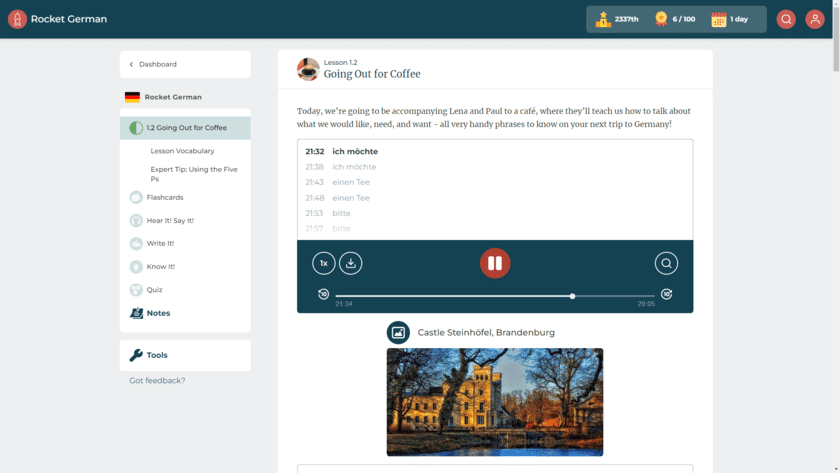
The sessions feature an English-speaking guide who leads you through the material, explaining concepts in a clear and accessible way, introducing new vocabulary in context, and encouraging you to actively participate. In short, I found these lessons to work very well.
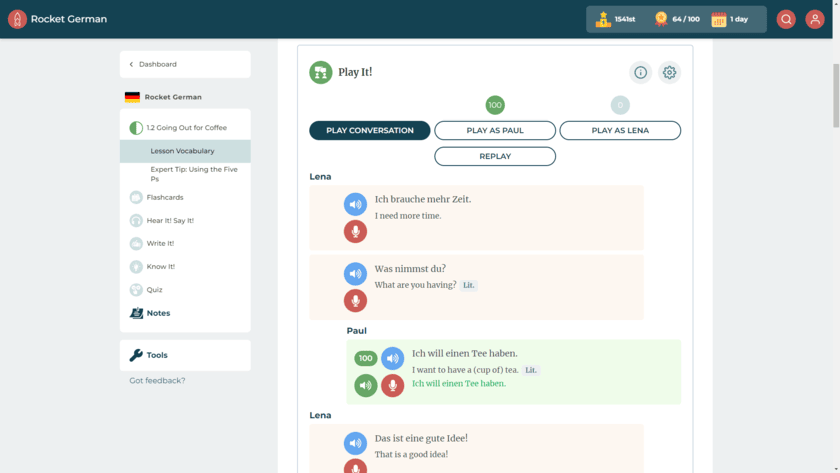
Rocket also gives you plenty of opportunities to practice your speaking skills. Their “Play the Part” feature, for example, uses AI to provide realistic conversation practice so you’re constantly implementing what you’ve learned.
Grammar Instruction That Actually Sticks
What truly sets Rocket German apart is its in-depth approach that goes beyond just audio lessons. Alongside the audio component, the app offers a deep variety of supplementary tools, including mock conversations, quizzes, flashcards, and detailed grammar instruction.
One aspect that I personally appreciated was the detailed grammar content. The grammar explanations in the Rocket program are presented in a user-friendly manner and supported by numerous examples, enhancing the overall learning experience. Grammar is a real strength here.
Quick Summary
With interactive audio lessons, drills to backstop the audio, and detailed grammar coverage, Rocket German is a must-have for serious German learners in my opinion. It earns our highest overall grade.
👉 Read Our Full Rocket German Review
Babbel
- Several Subscription Options
- 20-Day Money Back Guarantee
Pros
- Lessons move fast and hold your attention
- Daily review sessions take just 2-3 minutes
- Tons of cool bonus features, like podcasts, games and live classes
- Grammar instruction is very easy to follow
- Affordable price tag (as low as $8/mo)
Cons
- Could use more verbal/speaking practice
- Speech recognition software is just OK
Best for Budget-Conscious Learners: Babbel
For beginners seeking an affordable start to learning German, Babbel is our top choice. While it won’t make you fluent overnight, it lays a solid foundation for reaching an intermediate level.
Easy-to-Follow Learning Path
A key strength of Babbel lies in its structured approach. The app leads you through a well-designed curriculum, starting with basic vocabulary and progressing to more complex grammar and conversational skills.
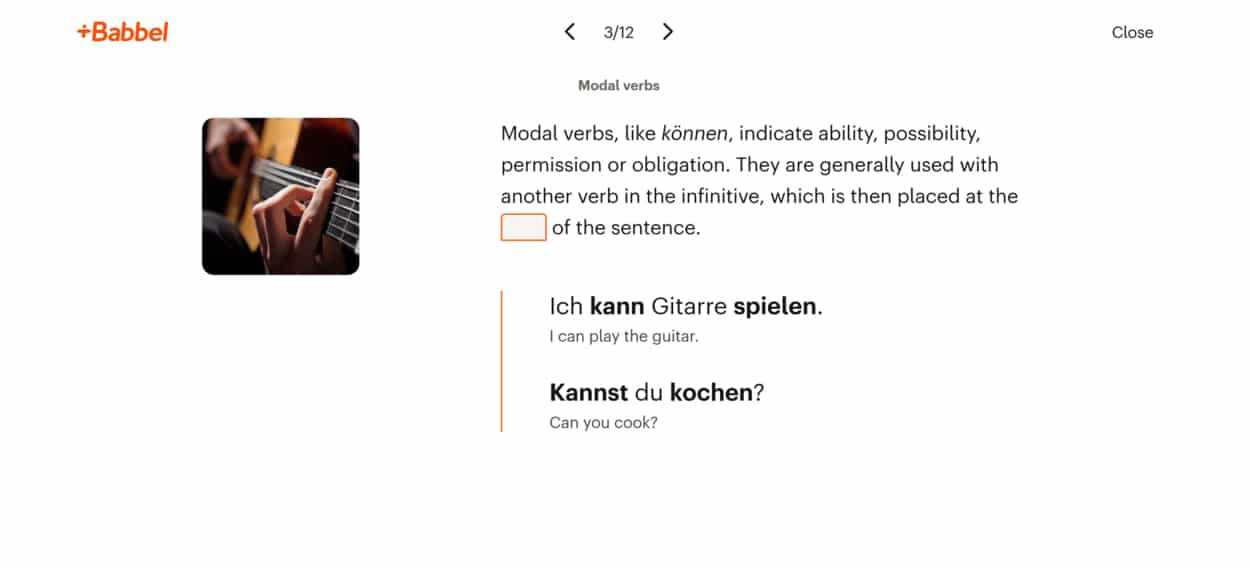
This structured path keeps you focused and motivated as you track your progress. Unlike other apps with jumbled curriculums, Babbel’s organized approach stood out to me.
Useful Vocab
Babbel focuses on teaching practical vocabulary that you can immediately use in real-life situations. At least I thought so.
Instead of overwhelming you with unnecessary words and phrases, it prioritizes essentials that enable you to start using German in everyday conversations right away.
Lessons Are Interactive & Engaging
Babbel’s lessons are interactive and engaging, incorporating a variety of exercises to reinforce learning.
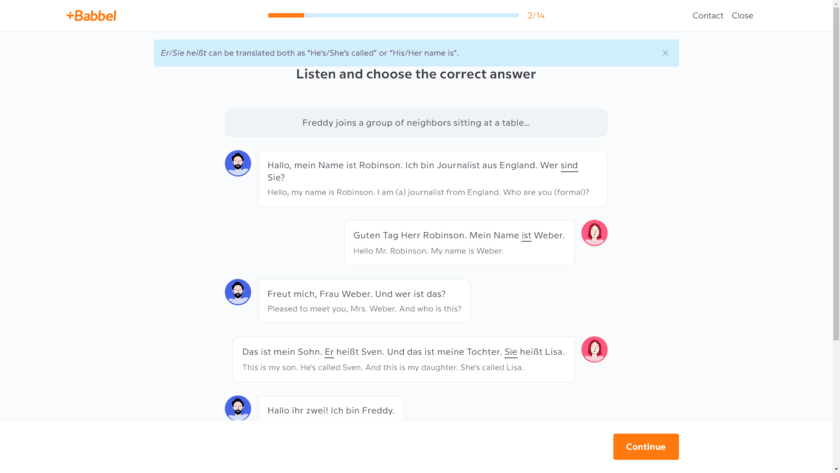
From listening and speaking exercises to writing and grammar drills, I found the app to offer a well-rounded learning experience that works for different learning styles. Plus, with lessons lasting just 10 minutes, they are very manageable.
Then outside of the regular lessons, you can use the Babbel Speak tool to engage in guided conversation practice, or explore the Babbel app to listen to a podcast or read the Babbel magazine. Babbel gives you lots of ways to practice German, which helps it stick even faster.
Quick Summary
Babbel is perfect for beginners and those on a budget. With its 10-minute, easily digestible lessons and a price tag under $10, it will take you from knowing nothing to conversational German.
👉 Read Our Full Babbel German Review
Pimsleur
- Monthly Subscription Plans
- Learn Online or Offline
Pros
- Love how the app is based on in-depth audio lessons
- Useful driving mode feature (like podcasts, great for commuters)
- Very cool platform with modern interface (sleek and responsive)
- Reinforcement drills post-audio lesson are highly effective for retention
- Liked the flexibility of month-to-month subscription
Cons
- Program felt kind of academic
- No images, video or other visuals in program
Great for Auditory Learners: Pimsleur
For those seeking audio lessons, Pimsleur offers a similar yet slightly different approach to learning as Rocket German, and at a more affordable price point.
All About Audio
Pimsleur’s lessons are primarily audio-based, focusing on improving listening and speaking skills. Each lesson builds upon the previous one, gradually increasing in complexity.
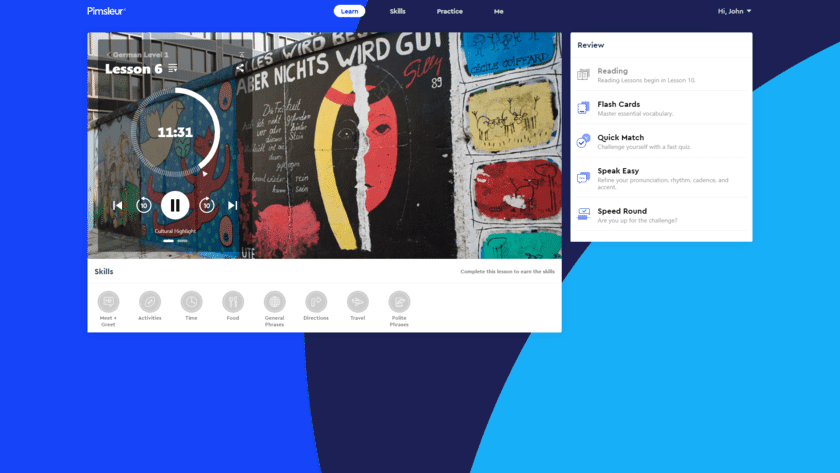
While Rocket German maintains a conversational tone, Pimsleur’s lessons tended to be more formal and academic. I didn’t mind this, but more casual learners might.
Despite this, Pimsleur’s structured and disciplined approach can be beneficial for learners seeking a more regimented learning experience.
Cool Bonus Features
One of the greatest features of Pimsleur’s app in my opinion is its dedicated driving mode, allowing learners to study while on the go.
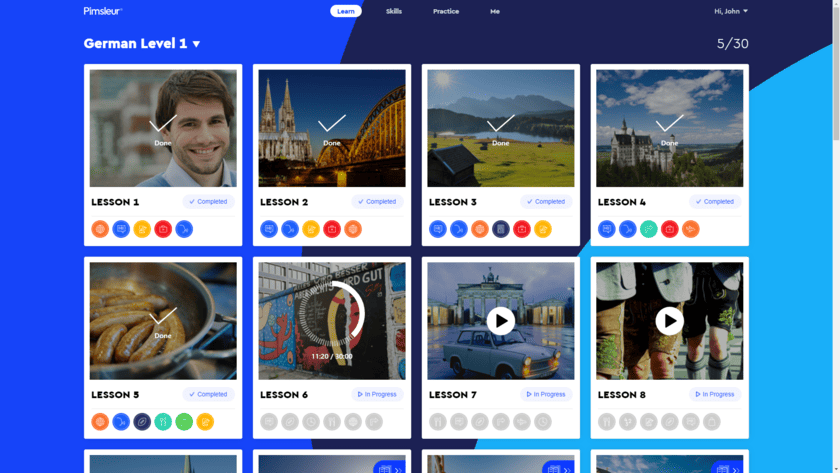
This feature is particularly convenient for commuters or those with busy schedules, as it is much like listening to a podcast in the car. The Spotify integration means you can stream lessons on your preferred app, and the Challenges and Rewards feature adds in a little gamification for whenever you want a break from the regular audio lessons.
Quick Summary
Pimsleur is a lot like Rocket German, offering a similar teaching methodology, but definitely has some differences. Pimsleur’s strengths include its monthly subscription plans, dedicated driving mode, and superior interface compared to its counterpart.
👉 Read Our Full Pimsleur German Review
Rosetta Stone
- Multiple Subscription Options
- Money Back Guarantee
Pros
- Ideal app for visual learners (entire program is built on images)
- Learning framework based on concept of immersion
- Affordable subscription packages (as low as $10 a month)
- Useful bonus resources (e.g., short stories, on-demand videos)
- Modern and easy-to-use interface (great mobile app)
Cons
- Lessons can become tedious at times (somewhat repetitive)
- Left wanting more in-depth verbal/speaking practice
Best for Visual Learners: Rosetta Stone
Rosetta Stone offers a unique and somewhat bold approach to language learning by throwing you into the German language right from the start. While this may seem daunting initially (it was for me), it can be a highly effective method for achieving fluency.
Focus on Immersion
At the core of Rosetta Stone is its immersive approach. The app presents you with images and scenarios, prompting you to directly associate them with the corresponding German words and phrases.
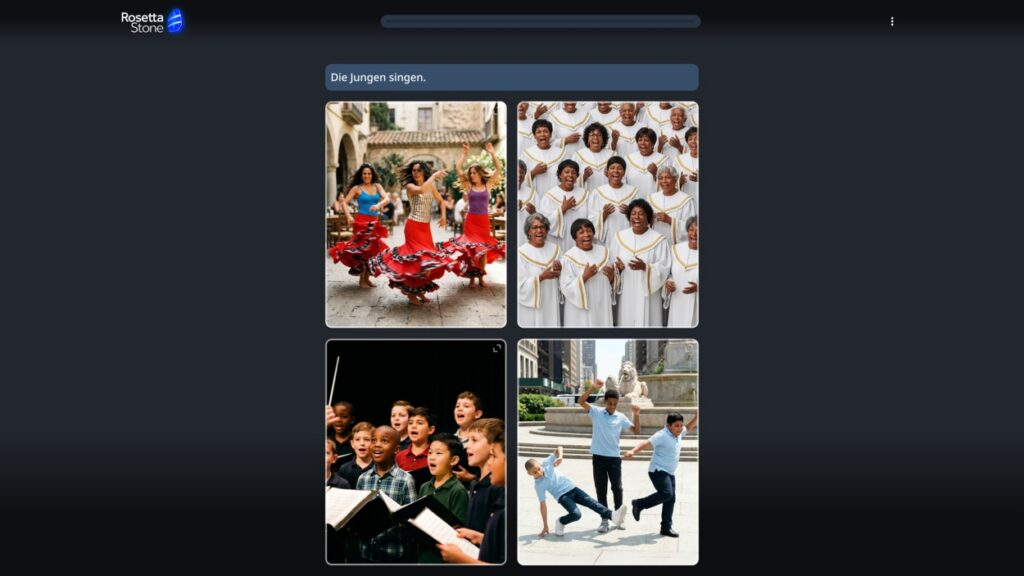
By avoiding translations and explanations in English, Rosetta Stone encourages you to think in German from the beginning, which is crucial for fluency.
They’ve also worked in tons of bonus resources to engage your brain in different ways. Rosetta Stone’s Stories narrated by native speakers help you develop an ear for German, while features like the Seek & Speak augmented reality feature and Phrasebook provide alternate ways to quickly boost your vocab.
Then in 2026, the newly added Sapphire Studio integrated AI tools, like a custom flashcard generator and a writing assistant, to the core program. As a result, Rosetta Stone now offers a more customized learning experience that lets you explore any niche topic you’re interested in.
Visuals Galore
Rosetta Stone places a strong emphasis on visual learning, more so than any other app I’ve encountered. It uses images extensively to reinforce vocabulary and concepts in every exercise.
This approach is particularly beneficial for visual learners, as it helps them remember words and phrases more easily when linked to visual cues.
Very Natural Lesson Progression
A key strength of Rosetta Stone is its natural language progression. The app starts with basic vocabulary and gradually introduces more complex grammar and conversational skills.
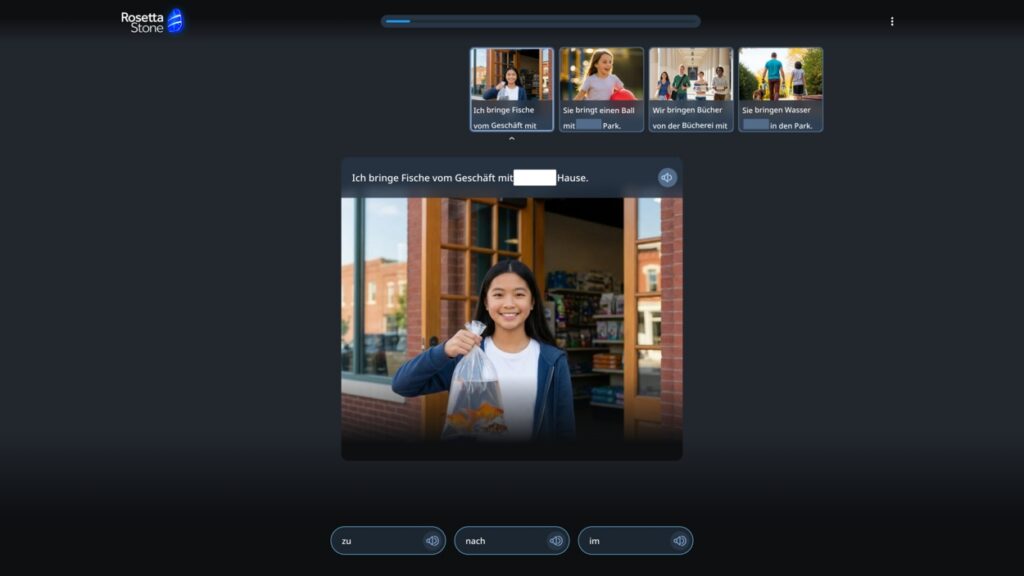
This gradual buildup enables learners to develop a solid foundation in the language. Unlike other apps, such as Mondly, this natural progression enhances vocabulary development.
Quick Summary
In my opinion, Rosetta Stone is an excellent choice for visual learners and those seeking a more immersive approach to learning German. While eliminating English from the learning process can be challenging, it definitely speeds up your learning process.
👉 Read Our Full Rosetta Stone German Review
Lingopie
- Multiple Subscription Options
- Cancel Whenever
Pros
- Very different language learning method based on watching TV and movies
- A lot of assistive features layered in to enhance the learning process
- Used the playback speed feature and auto-flashcard tool a lot
- Only about $6 per month
Cons
- No clear lesson plan or linear learning path
- Best for learners with some basic knowledge of German
Most Entertaining Way to Learn German: Lingopie
Lingopie takes a unique approach to immersion with a language learning method based on watching TV shows and movies.
While it may lack a structured learning path, it offers a cost-effective way to supplement your language learning with authentic and engaging German video content.
Premium Content
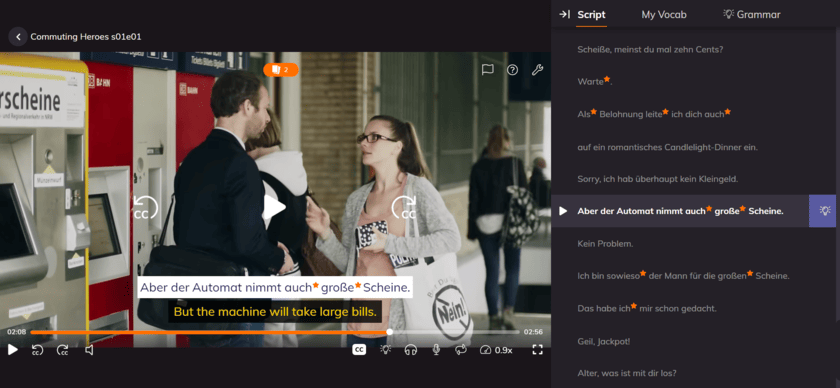
Lingopie’s approach is centered around using authentic German-language TV shows and movies as learning material. This not only provides exposure to real-life language use (which is great for speeding up fluency), but also makes the learning process more enjoyable and engaging in my opinion.
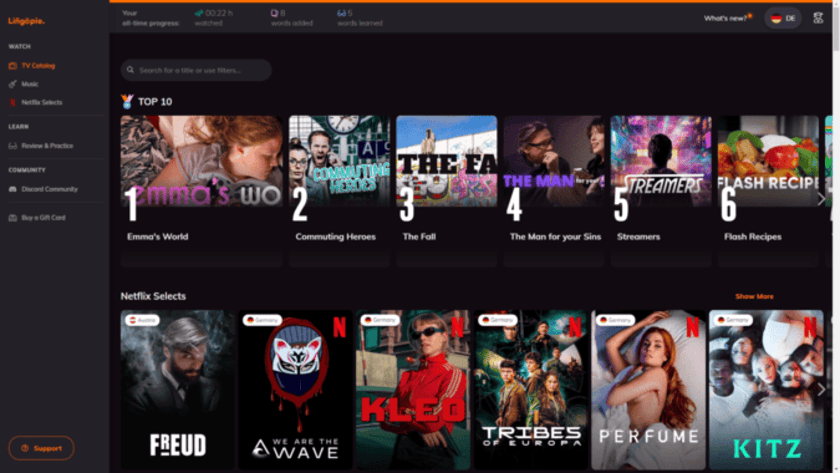
Plus, their library is very deep. They’re constantly adding new high-quality shows and movies to their content library, resulting in thousands of hours of material to watch.
On top of that, you get access to podcasts, short stories, and audiobooks in German. While you’ll probably spend most of your time streaming videos, I liked LingoPie’s well-rounded media collection, which lets you engage with German in several different ways.
Layered Features on Top of the Video
Lingopie is much more than subtitles on foreign language films. The app offers various learning tools which complement its video content, such as flashcards, grammar points, and slow-motion playback.
These tools enhance the learning experience by allowing you to interact with the material in different ways. For reference, my favorite part was slowing down playback speed to .65x and auto-generating flashcards.
Great Price
One of Lingopie’s main strengths is its affordability. With a low monthly subscription fee (about $6 per month for some plans), it offers excellent value for learners who want to supplement their studies with authentic German media.
Quick Summary
Lingopie is the ideal program for those looking to supplement another program like Babbel or Pimsleur, or juice up your vocabulary if you already have a decent German foundation.
👉 Read Our Full Lingopie German Review
We’ve used and reviewed a bunch of different German language apps at this point, and my favorite by far is Rocket German. It has everything I want, including audio lessons, interactive drills, and grammar coverage. It’s been highly effective.
German language apps range in price from about $6/month to hundreds of dollars. The best apps we have used all seem to cost about $8-$20 per month.
Yes, German apps do work. Obviously, apps alone won’t take you from newbie to totally fluent, but they are a really easy and affordable way to get you to a conversational, intermediate level of fluency.
Your approach to learning German is going to 100% determine how long it takes. If you immerse yourself in German, you can start conversing in as little as a month. More typically though, if you are doing lessons yourself at home, expect about 6-12 months to intermediate fluency.